Moin @little.yoda ,
ich melde mich wegen einer etwas lästigen Eigenschaft des Geräts Speedwire Inverter. Jedes mal nach einem Neustart sieht das bei mir so aus:
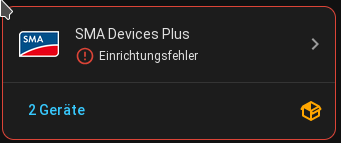
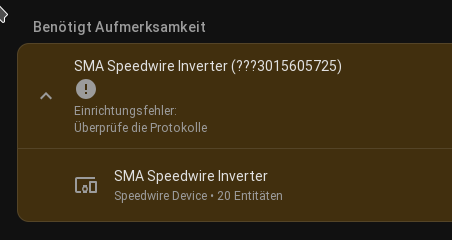
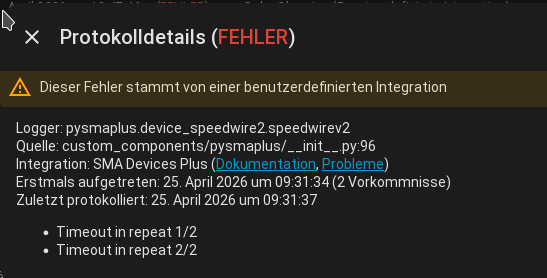
Einmal deaktivieren und sofortiges Reaktivieren behebt das Problem umgehend. Ich hatte gerade das Update auf die neueste Version gemacht, lief auch problemlos, aber dieses jeweils auftretende Einrichtungsproblem bleibt. Im Log finde ich dann das hier:
Logger: homeassistant.config_entries
Quelle: config_entries.py:769
Erstmals aufgetreten: 09:31:37 (1 Vorkommnis)
Zuletzt protokolliert: 09:31:37

Error setting up entry SMA Speedwire Inverter (???3015605725) for pysmaplus
Traceback (most recent call last):
  File "/usr/local/lib/python3.14/asyncio/tasks.py", line 488, in wait_for
    return await fut
           ^^^^^^^^^
asyncio.exceptions.CancelledError

The above exception was the direct cause of the following exception:

Traceback (most recent call last):
  File "/usr/local/lib/python3.14/site-packages/pysmaplus/device_speedwire2.py", line 271, in _send_receive
    data = await self._protocol.request(
           ^^^^^^^^^^^^^^^^^^^^^^^^^^^^^
        msg, timeout=self.timeout, expect_response=receive
        ^^^^^^^^^^^^^^^^^^^^^^^^^^^^^^^^^^^^^^^^^^^^^^^^^^
    )
    ^
  File "/usr/local/lib/python3.14/site-packages/pysmaplus/device_speedwire2.py", line 114, in request
    return await asyncio.wait_for(self._response_future, timeout=timeout)
           ^^^^^^^^^^^^^^^^^^^^^^^^^^^^^^^^^^^^^^^^^^^^^^^^^^^^^^^^^^^^^^
  File "/usr/local/lib/python3.14/asyncio/tasks.py", line 487, in wait_for
    async with timeouts.timeout(timeout):
               ~~~~~~~~~~~~~~~~^^^^^^^^^
  File "/usr/local/lib/python3.14/asyncio/timeouts.py", line 114, in __aexit__
    raise TimeoutError from exc_val
TimeoutError

The above exception was the direct cause of the following exception:

Traceback (most recent call last):
  File "/usr/src/homeassistant/homeassistant/config_entries.py", line 769, in __async_setup_with_context
    result = await component.async_setup_entry(hass, self)
             ^^^^^^^^^^^^^^^^^^^^^^^^^^^^^^^^^^^^^^^^^^^^^
  File "/config/custom_components/pysmaplus/__init__.py", line 103, in async_setup_entry
    sma = await getPysmaInstance(hass, entry.data)
          ^^^^^^^^^^^^^^^^^^^^^^^^^^^^^^^^^^^^^^^^
  File "/config/custom_components/pysmaplus/__init__.py", line 96, in getPysmaInstance
    await sma.new_session()
  File "/usr/local/lib/python3.14/site-packages/pysmaplus/device_speedwire2.py", line 523, in new_session
    await session.ensure_initialized()
  File "/usr/local/lib/python3.14/site-packages/pysmaplus/device_speedwire2.py", line 173, in ensure_initialized
    await self.init()
  File "/usr/local/lib/python3.14/site-packages/pysmaplus/device_speedwire2.py", line 178, in init
    await self._login()
  File "/usr/local/lib/python3.14/site-packages/pysmaplus/device_speedwire2.py", line 306, in _login
    data = await self._send_receive("login2")
           ^^^^^^^^^^^^^^^^^^^^^^^^^^^^^^^^^^
  File "/usr/local/lib/python3.14/site-packages/pysmaplus/device_speedwire2.py", line 302, in _send_receive
    raise SmaConnectionException("No response from inverter") from last_exc
pysmaplus.exceptions.SmaConnectionException: No response from inverter
Könnte es sein, dass die Wartezeit auf die Antwort vom Inverter für die HA-Startphase etwas kurz bemessen ist? Wenn alles läuft, funktioniert die Sequenz deaktivieren/aktivieren zuverlässig sofort beim ersten Mal.
 by HarryP: Zusammenführung Mehrfachpost (bei Änderungen oder hinzufügen von Inhalten bitte die „Bearbeitungsfunktion“ anstatt „Antworten“ zu nutzen)
 . Habe ich gerade gemacht, aber das Verhalten hat sich nicht geändert. tcpdump ist wieder mit gelaufen (Anhang). Dies ist die einzige Hello-Sequenz, bei der am Ende anscheinend Daten übertragen werden.


